Designing High-Concurrency, High-Availability Cloud Services (Go Edition)
Using a Go cloud service as the example, this post systematically covers how to design, implement, and test a production-grade backend that handles high concurrency with high availability. Beyond architectural ideas, it also gives practical engineering advice around common middleware (Kafka / Redis / Postgres / etcd / Kubernetes, etc.).
1. What is high concurrency
High concurrency is a system's ability to handle a large number of requests at the same time within a unit of time.
Common metrics:
- QPS / TPS: requests / transactions per second
- Concurrent connections: requests in flight at the same time
- Latency: P95 / P99
- Throughput
The essence of high concurrency is not "being fast" but:
How to schedule CPU, memory, I/O, and network efficiently with limited resources.
Go is a natural fit for high concurrency
- goroutines: an extremely low-cost concurrency model
- channels: safe concurrent communication
- the scheduler (GMP model): avoids thread explosion
- rich networking libraries (net/http, grpc)
2. What is high availability
High availability is about:
Whether the system can keep serving when failures occur.
Common metrics:
- Availability SLA: 99.9% / 99.99%
- MTBF / MTTR: mean time between failures / mean time to recovery
High availability focuses on:
- Fault isolation
- Automatic recovery
- Degradation and fallbacks
In one sentence:
High concurrency is about "how busy it is"; high availability is about "whether it goes down".
3. Achieving high concurrency
1. Asynchronous design (the core idea)
Synchronous calls:
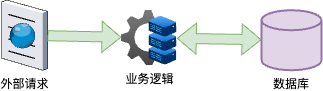
Asynchronous:
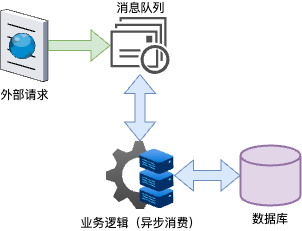
Good candidates for async:
- Sending notifications after an order is placed
- Writing logs / behavioral tracking events
- Financial reconciliation
- Data synchronization
2. Message queues: Kafka / RocketMQ
Purpose:
- Smoothing traffic peaks
- Decoupling services
- Asynchronous processing
Comparison:
| Aspect | Kafka | RocketMQ |
|---|---|---|
| Throughput | Extremely high | High |
| Ordering | Ordered per partition | Strict ordering |
| Transactions | Weak | Strong |
| Operations | Fairly complex | Relatively friendly |
Common Go clients:
- sarama (Kafka)
- rocketmq-client-go
3. Redis: the core of high-concurrency caching
3.1 Expiration strategies
- Periodic deletion
- Lazy deletion
3.2 Eviction policies
- volatile-lru
- allkeys-lru (recommended)
- volatile-ttl
3.3 Sentinel vs Cluster
| Mode | Use case | Characteristics |
|---|---|---|
| Sentinel | High availability | Automatic primary/replica failover |
| Cluster | High concurrency + large data | Sharding, strong scalability |
For read-heavy, high-concurrency workloads, Redis Cluster is the standard choice.
4. Database: Postgres design for high concurrency
4.1 Index design
- B-Tree (default)
- Covering indexes
- Avoid implicit type conversions
4.2 Sharding / partitioning
- Partition by time (logs, orders)
- Split tables by business dimension
Postgres natively supports partitioned tables, which beat manual table splitting.
4.3 GORM usage tips
- Forbid full table scans
- Select columns explicitly
- Use prepared statements
- Control the connection pool
5. Monolith vs microservices (from a concurrency perspective)
| Architecture | Pros | Cons |
|---|---|---|
| Monolith | Simple, good performance | Hard to scale |
| Microservices | Easy to scale, isolation | Network overhead, complexity |
A high-concurrency system doesn't necessarily need microservices, but it must have:
- Decoupled modules
- Clear interfaces
4. Achieving high availability
1. Multiple replicas and load balancing
Load balancing options
| Option | Notes |
|---|---|
| NGINX | Mature, flexible |
| AWS ALB/NLB | Managed, stable |
| K8s Service | Native, automatic |
| Docker Replica | Basic scaling |
2. etcd: configuration and service discovery
- Strong consistency (Raft)
- Configuration center
- Service registration and discovery
Common uses:
- Dynamic configuration
- Distributed locks
- Leader election
3. Microservice design (DDD + gRPC)
Core ideas of DDD
- Bounded Context
- Aggregate root
- Domain events
Advantages of gRPC + go-micro
- High performance
- Built-in service discovery
- A mature middleware ecosystem
5. Observability: an opaque system is an unavailable system
1. Log collection
- Grafana Loki (lightweight)
- Graylog (full-text search)
2. Tracing
- Jaeger
- OpenTelemetry
3. Metrics monitoring
- Prometheus
- Grafana Dashboard
Key metrics:
- QPS
- Error Rate
- P99 Latency
- CPU / Memory
4. Alerting and health checks
- Grafana AlertManager
- UptimeRobot
- Kubernetes Liveness / Readiness Probe
6. Testing high concurrency
1. Load testing tools
- wrk
- hey
- k6
2. Load testing principles
- Ramp up load gradually
- Find the bottleneck
- Verify the cache hit rate
3. Common bottlenecks
- Database connection pool
- Lock contention
- GC
- Network I/O
7. Testing high availability
Failure drills (Chaos Engineering)
- Kill Pods
- Inject network latency
- Take Redis / the DB down
Tools:
- Chaos Mesh
- Manual drills
8. Fallbacks: what if the service goes down?
1. Degradation
- Turn off non-core features
- Return fallback data
2. Rate limiting
- Token Bucket
- Leaky Bucket
- Redis / Envoy / NGINX
3. Circuit breaking
- Triggered by error rate
- Automatic recovery
4. Disaster recovery
- Multi-AZ deployment
- Data backups
- Hot/cold failover
9. Summary
A truly high-concurrency, high-availability Go cloud service isn't built by piling up any single piece of middleware; it is:
The combined result of architecture design + engineering standards + automated operations + failure awareness.
If you remember only one thing:
First make sure it doesn't go down, then make it faster.